Door-to-Door Petitioning Best Practices for Better Results

Effective Door-to-Door Petitioning Tips Every Campaign Needs

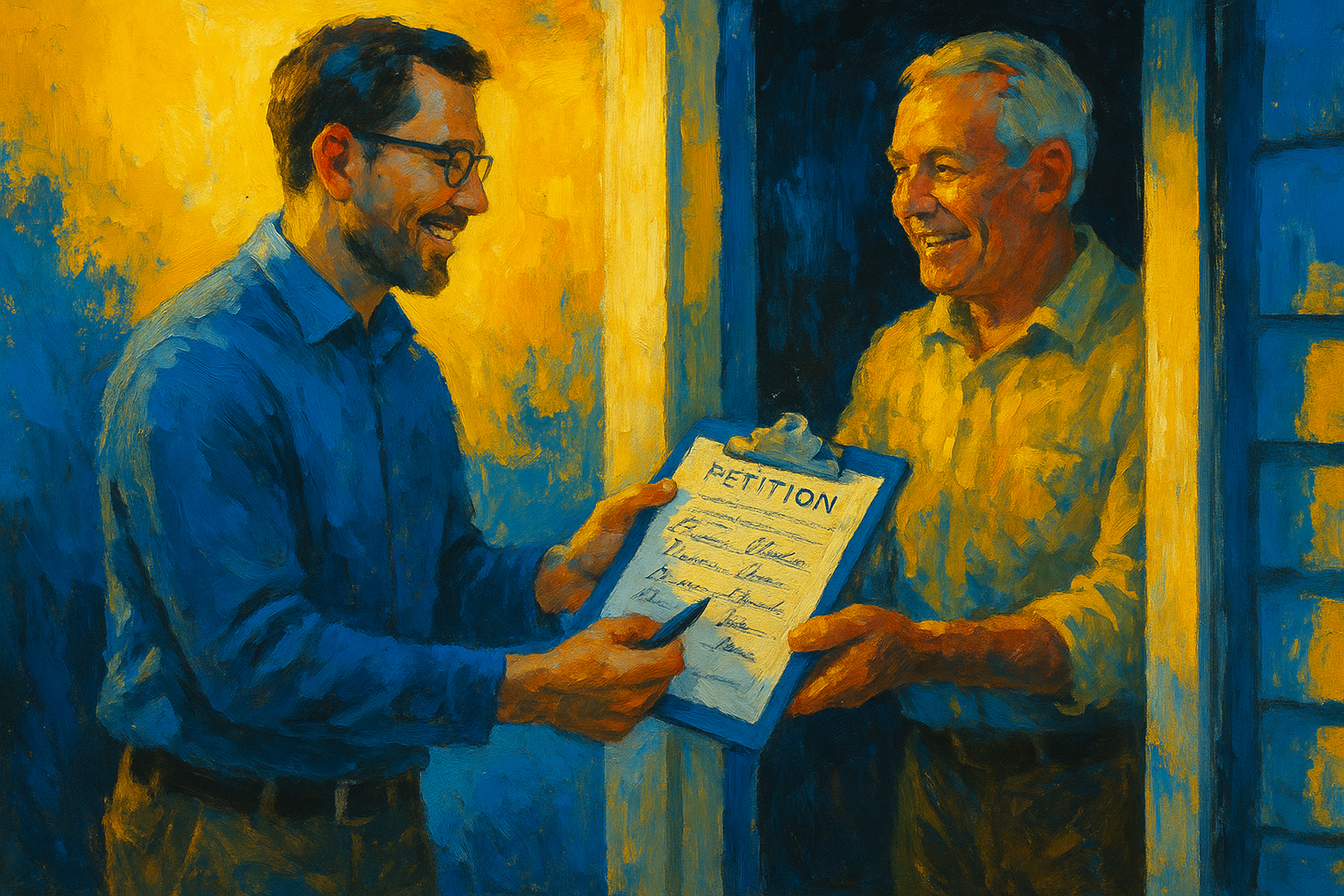
Door-to-door petitioning best practices for better results can make or break your campaign. Knocking on doors, having real conversations, and collecting signatures in person still work better than any other method. Why? Because personal contact builds trust and helps voters understand what your petition is about. But success depends on more than just showing up—it takes the right strategy, careful planning, and a team that follows every rule. One small mistake can cost your campaign hundreds of signatures, or even keep you off the ballot entirely.

This guide explains everything you need to know: how to follow local laws, train your team, target the right areas, and collect valid signatures the smart way. Get ready to boost your results with proven, step-by-step tips.

Door-to-Door Petitioning Best Practices for Better Results

Why Door-to-Door Petitioning Still Works

Door-to-door petitioning works because it puts you in front of real voters. In-person signature gathering lets people ask questions and feel confident about signing. When you talk to voters, you build trust. They are more likely to listen, understand your cause, and give a valid signature.

Campaigns that rely on door-to-door petitioning see higher signature rates than those who just stand on street corners or use digital tools. Local and state rules often require a certain number of valid, in-person signatures. Door-to-door outreach makes it easier to meet these thresholds, especially when you target the right neighborhoods. Voters like to see a friendly face, not just a flier or email.

Understand Local Laws Before You Knock

Every city, county, and state has different petitioning laws and door-to-door petition rules. Some places require a permit or advance notice before you start. You may need to be a registered voter, a resident, or a certain age to collect signatures. In some apartment complexes or gated communities, petitioning is not allowed without permission.

Always carry any required ID or documentation. Officials may ask you to show your forms or proof of your role. If you are not sure what rules apply, check your local government’s website or ask your city clerk. Knowing the law helps you avoid costly mistakes. For a full list of state-by-state petition rules, visit the National Association of Secretaries of State (NASS).

Build a Strong Petition Circulator Team

A great campaign starts with the right team. Petition circulator training ensures that everyone knows what to say and do in the field. Before anyone collects a single signature, give them talking points and review legal do’s and don’ts. Make sure every circulator understands your petition’s goal, its official wording, and why it matters.

Practice real-world conversations with your team. Roleplay tough questions or skeptical voters. Use a sign-in and check-out system to track where your forms go and who has them. This makes sure nothing gets lost and keeps your process organized.

Pro Tip: Make sure each circulator can clearly explain your petition in under 30 seconds.

Know Your Target Area and Audience

Smart voter targeting helps you get better results, faster. Use voter data to pick neighborhoods with lots of eligible voters. Segment your area by ZIP code, party affiliation, or issue interest. If your petition needs certain kinds of signatures (like from city residents or a specific district), focus on those places first.

Be respectful of no-solicitation zones or cultural boundaries. In diverse areas, consider recruiting bilingual circulators who can talk with every voter.

Tip: Focus on precincts with low early voting and high petition value. The right location can double your success.

Use Clear Messaging That Connects

A good petition script makes a huge difference. Start every conversation by telling people who you are, what your petition is about, and why it matters in simple words. Skip technical terms and speak plainly, matching your message to the voter’s values.

Common questions you might hear include: “Is this a political petition?”, “Will my name be on a list?”, or “What happens to my information?” Be honest and clear—transparency builds trust. Tell voters exactly how their signature will be used and who will see it.

Want more tips? Check out our post on Polling-Based Messaging for Petitions 

Signature Collection Best Practices

How to collect petition signatures the right way means never cutting corners. Always have voters sign in person. Make sure they provide a valid address and meet all eligibility rules (like age or city residency). Double-check their registration when possible.

As soon as a signature is collected, the circulator should fill out their section—never later. Use sturdy clipboards, backup pens, and weather-resistant forms to protect signatures in any conditions.

Alert: Never pre-fill information or sign for voters. That’s fraud, and it can get your petition thrown out.

Track Your Progress Daily:

Tracking is key for petition tracking and hitting your goals. Log signatures by circulator, location, and date. Set daily or weekly signature targets, and monitor your progress closely. If you spot incomplete or questionable sheets, flag them right away for review.

Digitally scan all completed sheets for backup storage. Use numbering on your forms to avoid confusion. This keeps everything organized, speeds up final review, and protects against lost paperwork.

Engage Respectfully and Handle Rejection Well

Good petition etiquette means treating everyone with respect, even if they say no. Always thank people for their time—even if they don’t sign. Never argue, pressure, or interrupt. Stay polite and positive. If someone is rude or upset, your circulators should step back and move on safely.

Respect “No Soliciting” signs, both for legal reasons and out of respect for the community. Teach your team to handle rejection with a smile and keep the campaign’s reputation strong.

Prioritize Safety and Accessibility

Canvassing safety tips matter for every petition drive. Work in pairs, especially in new neighborhoods, or check in regularly if someone is canvassing alone. Carry a photo ID and keep emergency contacts handy. Never canvass after dark or in unsafe areas.

Be mindful of seniors, disabled voters, or those who need help. Offer to bring the form to them, or give them time to read before signing. Assign routes with weather, mobility, and terrain in mind.

Safety Reminder: A safe circulator is an effective circulator.

Final Thoughts

Effective door-to-door petitioning is about more than knocking on doors—it’s about building real connections and following every rule. By using these best practices, you can raise your valid signature count, avoid costly mistakes, and show voters you care about doing things the right way. Remember, strong planning, clear messaging, and a trained team are the keys to success. Always stay up to date on local petition laws, and never overlook safety or respect for the community.

With Sutton & Smart’s support, your campaign will be ready to collect signatures confidently and legally. If you want better results, start with a smart strategy and proven tools. 

Need help getting started?

Contact our experts today for free resources, training, and everything you need for a winning petition drive.


Jon Sutton

An expert in management, strategy, and field organizing, Jon has been a frequent commentator in national publications.

Author | Partner

Scroll to Top

View All Brands

Fill out the form to view all Sutton & Smart Brands.

By submitting this form, you consent to allow Sutton & Smart to store and process your information in accordance with our Privacy Policy. You also consent to receive communications via email, phone, or SMS from Sutton & Smart regarding our services, including promotional offers and inquiries. These communications may be generated using automated technology, such as AI-powered autodialers, pre-recorded messages, and SMS notifications. Your information will be used strictly for business purposes, and you may opt out of these communications at any time. By clicking submit, you acknowledge that the effectiveness of Sutton & Smart’s political consulting strategies and outcomes may vary based on numerous factors outside our control, and no specific results or timelines are guaranteed. You also confirm that you have read and agree to our Terms of Service.

Work With Us

Fill out the form below to speak with someone from our team.

By submitting this form, you consent to allow Sutton & Smart to store and process your information in accordance with our Privacy Policy. You also consent to receive communications via email, phone, or SMS from Sutton & Smart regarding our services, including promotional offers and inquiries. These communications may be generated using automated technology, such as AI-powered autodialers, pre-recorded messages, and SMS notifications. Your information will be used strictly for business purposes, and you may opt out of these communications at any time. By clicking submit, you acknowledge that the effectiveness of Sutton & Smart’s political consulting strategies and outcomes may vary based on numerous factors outside our control, and no specific results or timelines are guaranteed. You also confirm that you have read and agree to our Terms of Service.