AI for Political Campaigns: Advantages in Targeting and Outreach
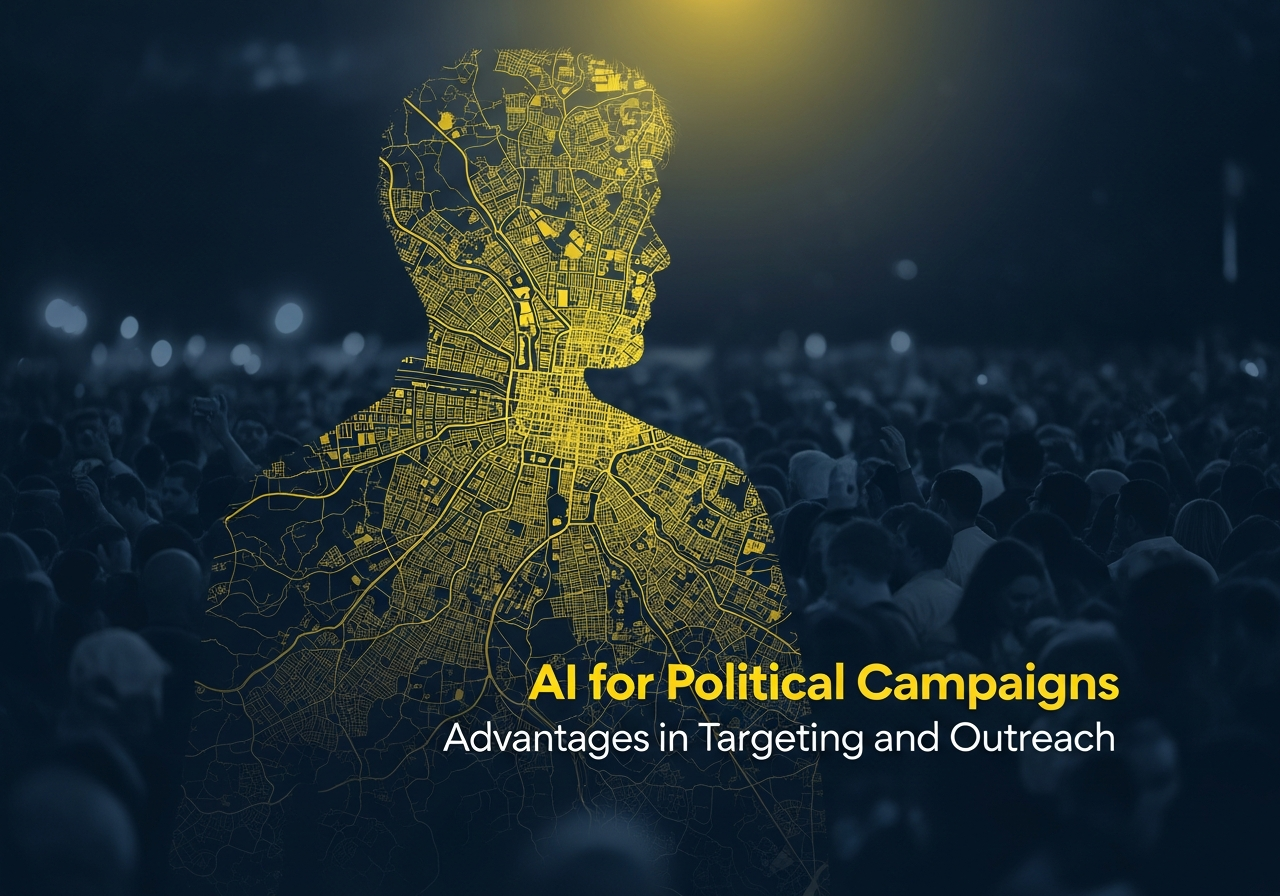
AI for political campaigns: advantages in targeting and outreach are reshaping how we secure Democratic victories in an increasingly volatile electoral landscape. The days of relying solely on manual voter contact and generic mailers are fading as we face a Republican machine utilizing every digital trick in the book. This shift is not merely about efficiency; it is about survival in a cycle where disinformation spreads faster than the truth. Whether you are running for a local school board to stop book bans or managing a statewide Senate race, understanding these tools is non-negotiable. We are seeing a fundamental democratization of campaign technology, where tools that once cost millions are now accessible to down-ballot candidates fighting for our values.
Leveraging AI to Defeat Your Opponent: Scale, Speed, and Precision
The fundamental advantage of artificial intelligence in our field is the ability to scale operations without bankrupting your budget. In the past, only presidential or well-funded Senate campaigns could afford sophisticated data modeling and rapid-response content teams. Today, AI for political campaigns offers advantages in targeting and outreach that level the playing field against deep-pocketed corporate donors funding the opposition. By automating routine tasks—from drafting social media copy to analyzing donor data—we free up your staff to focus on high-value interactions. However, we must be clear-eyed about the landscape: while these tools reduce costs, they also lower the barrier for bad actors. As research indicates, the technology makes political dirty tricks easier and cheaper. Our goal as Democratic strategists is to use these tools to amplify the truth, not to distort reality. We leverage automation to ensure that when a Republican opponent votes against reproductive freedom, your constituents know about it within the hour, across every platform they frequent.
Precision Targeting: Finding Your Win Number in the Noise
The era of the ‘spray and pray’ approach to voter contact is over. Modern campaigns live and die by their ability to interpret data. AI enhances our ability to analyze voter sentiment and characterize public input with a speed that human analysts cannot match. Instead of manually reading thousands of survey responses, AI tools can instantly categorize constituent feedback, identifying the specific issues driving anxiety or enthusiasm in swing precincts. This allows for hyper-personalized messaging. If a voter is concerned about healthcare costs, your outreach to them should focus exclusively on that issue, rather than a generic bio spot. By utilizing predictive modeling, we can identify likely Democratic voters who are at risk of staying home and deploy resources specifically to mobilize them. This is how we protect democracy: by engaging voters on the issues that actually matter to them, rather than shouting into the void.
Content Velocity: Dominating the Narrative Before Truth Social Reacts
Speed is a weapon. In the current media environment, the news cycle moves in minutes, not days. Platforms like BattlegroundAI are acting as a central nervous system for campaigns, allowing for the rapid creation of YouTube scripts, social media posts, and digital advertisements. This capability allows Democratic candidates to respond to GOP attacks in real-time. When an opponent spreads misinformation, you cannot afford to wait 48 hours for a creative agency to draft a response. AI tools enable you to generate professional-grade content optimized for multiple channels simultaneously—Twitter, Facebook, Email, and CTV—ensuring your message defines the narrative. This resource efficiency is critical for smaller campaigns that need to look and sound like major operations to gain credibility with voters. You get the output of a ten-person creative team for the price of a software subscription.
The Ethics Gap: Avoiding the Deepfake Trap
While the GOP may be willing to embrace the ‘Wild West’ of deepfakes and manipulated audio, Democratic campaigns must hold the line on ethics. The use of generative AI to create deceptive content is a massive risk. Voters are already skeptical of political messaging; 97% of Americans express concern about AI-driven personalization once informed about it. Reputational damage from being caught using misleading AI content is swift and often fatal to a campaign. We have seen instances in international elections where candidates used AI to produce deepfakes, attacking opponents or inflating their own image. This contributes to an ‘arms race’ of disinformation that degrades our democracy. Your strategy must be distinct: use AI for optimization and genuine content creation, never for deception. If you use synthetic voice or video, transparency is mandatory to maintain trust.
Your Deployment Protocol: A Strategic Checklist
Before you integrate these tools into your campaign infrastructure, you need a strict protocol to ensure compliance and effectiveness. First, prioritize transparency. Any AI-generated visual or audio content should be clearly disclosed, anticipating future regulations like those proposed by Rep. Yvette Clarke. Second, evaluate integration. Ensure your chosen AI tools can talk to your existing voter file systems; data silos lose elections. Third, establish a human-in-the-loop policy. AI is a drafter, not an approver. Every piece of content must be reviewed by a human staffer to ensure it aligns with campaign messaging and avoids hallucinations. Finally, monitor platform policies. Social media giants are cracking down on political AI content; you do not want your account suspended three weeks before Election Day because you violated a Terms of Service update regarding synthetic media.
The Sutton & Smart Difference: Powering the Blue Wave
Hope is not a strategy, and a subscription to an AI tool is not a campaign. To defeat a well-funded Republican opponent, you need more than just software; you need a war room that understands how to weaponize data without losing the human connection. At Sutton & Smart, we specialize in Democrat Media Buying and Political Consulting that protect your narrative. We do not just generate ideas; we deploy them through sophisticated ActBlue optimization, proven campaigns strategies, precision digital buys that ensure your message lands exactly where it is needed. We combine the raw power of AI targeting with seasoned political judgment to build the full-stack infrastructure required to win. The other side is already automating their attacks. Let us automate your defense and power your victory.
Ready to Win?
Stop guessing. Contact Sutton & Smart today to deploy our Democratic logistics infrastructure.
Ready to launch a winning campaign? Let Sutton & Smart political consulting help you maximize your budget, raise a bigger war chest, and reach more voters.
Jon Sutton
An expert in management, strategy, and field organizing, Jon has been a frequent commentator in national publications.
AutoAuthor | Partner
Have Questions?
Frequently Asked Questions
Not anymore. Many platforms offer tiered pricing or free tiers for low-volume usage. Tools like BattlegroundAI and Call Time specifically target smaller operations with affordable subscription models, making high-level tech accessible to school board and city council races.
Absolutely not. AI is a force multiplier, not a replacement. It can write a first draft of a press release or generate ten variations of a fundraising email, but it lacks the political intuition, emotional intelligence, and strategic judgment that a human communications director provides.
Generally yes, but with caveats. The regulatory landscape is evolving rapidly. While there is no federal ban, disclosure requirements are increasing. Always focus on transparency and consult with legal counsel regarding state-specific laws on synthetic media.
This article is provided for educational and informational purposes only and does not constitute legal, financial, or tax advice. Political campaign laws, FEC regulations, voter-file handling rules, and platform policies (Meta, Google, etc.) are subject to frequent change. State-level laws governing the use, storage, and transmission of voter files or personally identifiable political data vary significantly and may impose strict limitations on third-party uploads, data matching, or cross-platform activation. Always consult your campaign’s General Counsel, Compliance Treasurer, or state party data governance office before making strategic, legal, or financial decisions related to voter data. Parts of this article may have been created, drafted, or refined using artificial intelligence tools. AI systems can produce errors or outdated information, so all content should be independently verified before use in any official campaign capacity. Sutton & Smart is an independent political consulting firm. Unless explicitly stated, we are not affiliated with, endorsed by, or sponsored by any third-party platforms mentioned in this content, including but not limited to NGP VAN, ActBlue, Meta (Facebook/Instagram), Google, Hyros, or Vibe.co. All trademarks and brand names belong to their respective owners and are used solely for descriptive and educational purposes.
https://www.bloomberg.com/news/features/2023-07-11/chatgpt-ai-boom-makes-political-dirty-tricks-easier-and-cheaper
https://digiday.com/media/ai-briefing-how-political-startups-are-helping-small-political-campaigns-scale-content-and-ads-with-ai/
https://arxiv.org/html/2501.10387v1