Bulk Political Mail Services: USPS Logistics Management
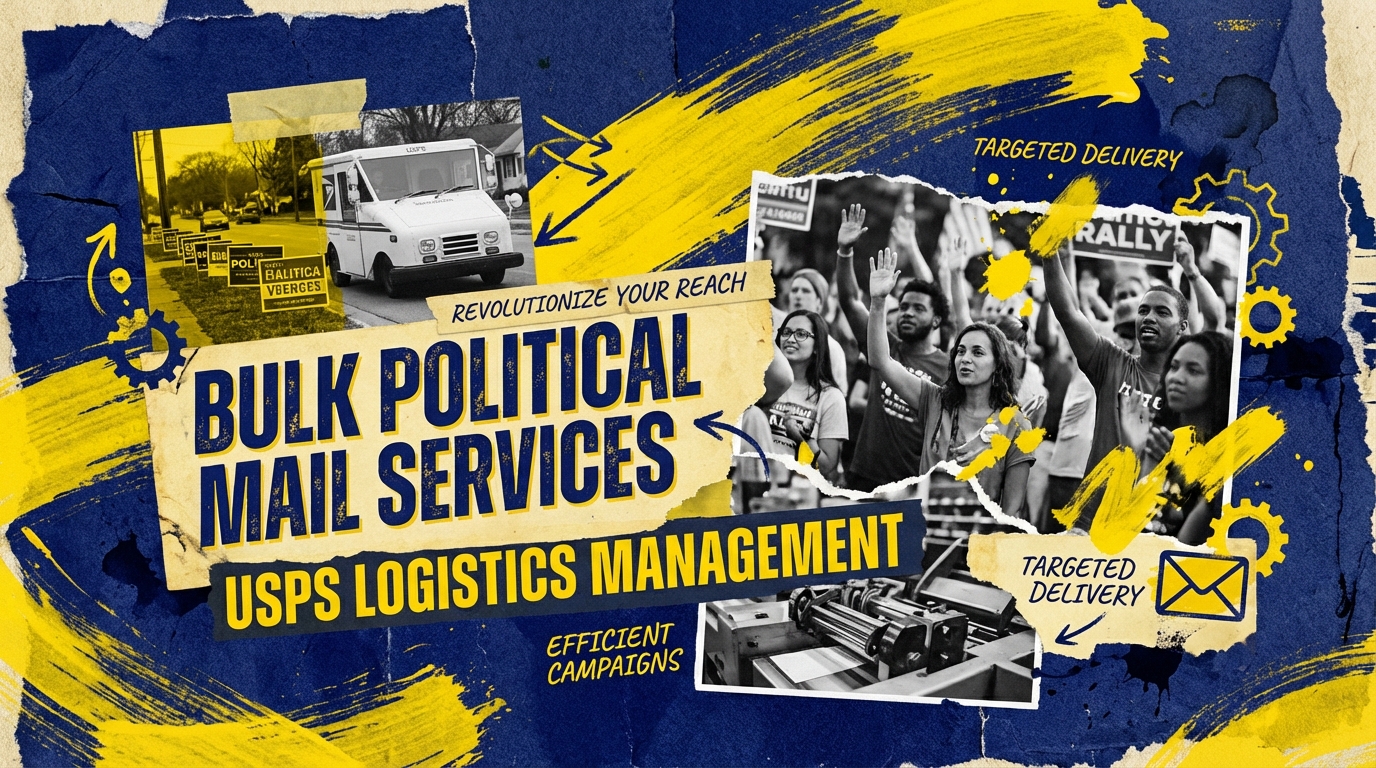
Bulk Political Mail Services: USPS Logistics Management form the invisible backbone of any winning Democratic campaign, ensuring your message reaches voters right at their kitchen tables. While the Republican apparatus pours millions into broad broadcast fear-mongering, smart Progressive campaigns know that physical mail offers a tangible connection that digital ads simply cannot replicate. To secure a Blue Wave, you must move beyond viewing the post office as a simple delivery service and start treating it as a complex logistics partner. Understanding how to navigate permits, presort requirements, and entry units is not administrative trivia; it is a strategic necessity for preserving resources and maximizing voter contact in critical districts.
Mastering Bulk Political Mail Services: USPS Logistics Management for Democratic Victory
The United States Postal Service is the only entity with the infrastructure to touch every single household in your district, making it an indispensable ally in the fight for reproductive freedom and democracy. However, the USPS does not function like a modern SaaS platform; it is a massive logistical engine that requires precise inputs to yield results. When we discuss logistics management in a political context, we are referring to the stack of operations required to move data from your voter file into a physical mailbox at the lowest possible cost per piece. This involves understanding that USPS offers a specific Political Mail program that provides visibility and ‘Red Tag’ tracking, but it does not offer special postage rates solely for being a candidate. Your campaign competes for space in the mail stream alongside commercial advertisers, meaning your logistical planning determines whether your persuasion piece arrives before Election Day or gets stuck in a processing center while your opponent controls the narrative.
Pricing Tiers and Strategic Cost Management
One of the most persistent myths we see in first-time campaigns is the expectation of a specific ‘political rate’ for postage. In reality, Bulk Political Mail Services: USPS Logistics Management rely on standard commercial tiers: Marketing Mail and First-Class. For most persuasion and fundraising efforts, you will utilize USPS Marketing Mail (formerly Standard Mail). If you prepare your mail correctly with automation-compatible barcodes, postage generally ranges from $0.23 to $0.40 per piece, significantly cheaper than a $0.73 stamp. However, this lower tier comes with a trade-off in speed, taking anywhere from 3 to 10 days for delivery. For strict Get Out The Vote (GOTV) windows where timing is non-negotiable, you may need to upgrade to Presorted First-Class, which costs roughly $0.54 but moves faster. Additionally, for sheer saturation without a specific name list, Every Door Direct Mail (EDDM) allows you to target entire carrier routes for as low as $0.22 per piece. Mastering these tiers allows you to allocate funds efficiently, saving high-cost postage for the most critical late-stage communications.
Integration and Targeting: From NGP VAN to the Mailbox
The USPS provides the rails, but you must provide the train. There is no direct integration between the Postal Service and Democratic tools like NGP VAN, ActBlue, or TargetSmart. This is where the logistical chain often breaks for inexperienced managers. To execute a bulk mailing, you must export your targeted universe from your voter file, scrub it through National Change of Address (NCOA) databases to meet move-update requirements, and then run it through presort software. This software organizes your list into the specific sequence a mail carrier walks, generating the tray tags and paperwork required for bulk discounts. While the USPS offers tools like the EDDM mapping portal for geographic targeting based on census data (income, age, household size), they do not provide partisan data. You cannot ask the Post Office to deliver only to ‘Likely Democrats.’ That segmentation happens in your CRM before the list ever reaches the printer or the Bulk Mail Entry Unit.
Common Pitfalls in Political Mail Logistics
We have seen too many promising campaigns falter because they underestimated the rigidity of federal mail rules. The most common error is ignoring the minimum quantity requirements; you generally need at least 200 pieces or 50 pounds of mail to qualify for Marketing Mail rates, and 500 pieces for Presorted First-Class. Another critical mistake is failing to utilize the USPS Political Mail ‘Red Tag’ service. These physical tags alert postal workers that your trays contain political content, which often affords them unofficial priority handling during the crunch of election season. Furthermore, many campaigns fail to budget for the ‘permit imprint’ fee, which is an annual cost unless you are using a vendor’s permit. Finally, do not assume nonprofit rates apply to you; standard candidate committees and PACs are not 501(c)(3) organizations and must pay commercial rates. Every dollar wasted on rejected mail or full-price postage is a dollar the GOP can use against us.
Pre-Drop Logistics Checklist
Before you authorize a print run, ensure your logistics are sound to avoid costly delays. First, verify your indicia (the postage box in the corner) matches the class of mail you are paying for and the permit number you are using. Second, ensure your mail piece meets aspect ratio requirements; a postcard that is too square or too flimsy will be rejected or charged a surcharge. Third, confirm that your mail house has scheduled the drop with the local Sectional Center Facility (SCF) if you are dropping a large volume, as surprise dumps can languish on a loading dock. Fourth, check that your data export included the ‘Or Current Resident’ line if you want to ensure delivery even if the specific voter has moved, a tactic often useful for district-wide awareness. Finally, ensure the funds are cleared in your postal account (CAPS/EPS) before the truck leaves the printer; the USPS operates strictly on a pay-before-service model.
The Sutton & Smart Difference
Defeating a well-funded Republican incumbent requires more than just passion; it requires operational excellence. While your opponent relies on dark money, you must rely on precision. At Sutton & Smart, we provide the Full-Stack Infrastructure necessary to dominate the mailbox. We specialize in Union-Printed Direct Mail, ensuring that every piece of persuasion not only reaches the voter on time but also carries the union bug that signals our shared values to labor households. We handle the heavy lifting of Bulk Political Mail Services: USPS Logistics Management—from navigating complex permit structures to executing emergency 48-hour production runs for rapid response. Don’t let logistical errors silence your message. We turn data into delivery so you can focus on the victory.
Ready to Secure the Vote?
Contact Sutton & Smart today to optimize your mail logistics and build the infrastructure for a winning campaign.
Ready to launch a winning campaign? Let Sutton & Smart political consulting help you maximize your budget, raise a bigger war chest, and reach more voters.
Jon Sutton
An expert in management, strategy, and field organizing, Jon has been a frequent commentator in national publications.
AutoAuthor | Partner
Have Questions?
Frequently Asked Questions
No, there is no distinct 'political rate.' Candidates typically use USPS Marketing Mail (bulk) or Presorted First-Class. However, using the official 'Political Mail' red tags can help ensure better visibility and tracking within the postal system.
EDDM (Every Door Direct Mail) saturates every address on a specific carrier route without names, which is great for general awareness. Targeted mail uses a specific voter list (like NGP VAN) to send mail only to specific people, such as registered Democrats or swing voters.
No. USPS does not integrate with CRM or fundraising software. You must export your donor list from ActBlue, process it through presort software or a mail vendor, and then physically enter the mail into the USPS network.
This article is provided for educational and informational purposes only and does not constitute legal, financial, or tax advice. Political campaign laws, FEC regulations, voter-file handling rules, and platform policies (Meta, Google, etc.) are subject to frequent change. State-level laws governing the use, storage, and transmission of voter files or personally identifiable political data vary significantly and may impose strict limitations on third-party uploads, data matching, or cross-platform activation. Always consult your campaign’s General Counsel, Compliance Treasurer, or state party data governance office before making strategic, legal, or financial decisions related to voter data. Parts of this article may have been created, drafted, or refined using artificial intelligence tools. AI systems can produce errors or outdated information, so all content should be independently verified before use in any official campaign capacity. Sutton & Smart is an independent political consulting firm. Unless explicitly stated, we are not affiliated with, endorsed by, or sponsored by any third-party platforms mentioned in this content, including but not limited to NGP VAN, ActBlue, Meta (Facebook/Instagram), Google, Hyros, or Vibe.co. All trademarks and brand names belong to their respective owners and are used solely for descriptive and educational purposes.
https://savepostage.com/bulkmail101/political.html
https://www.thecampaignworkshop.com/blog/political-direct-mail/political-direct-mail
https://www.usps.com/business/every-door-direct-mail.htm